
About Black Point, Oahu
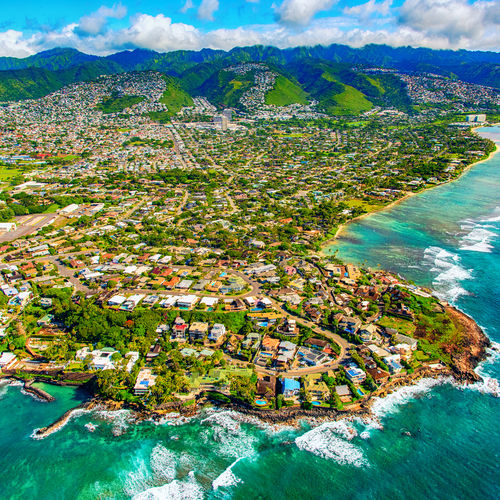
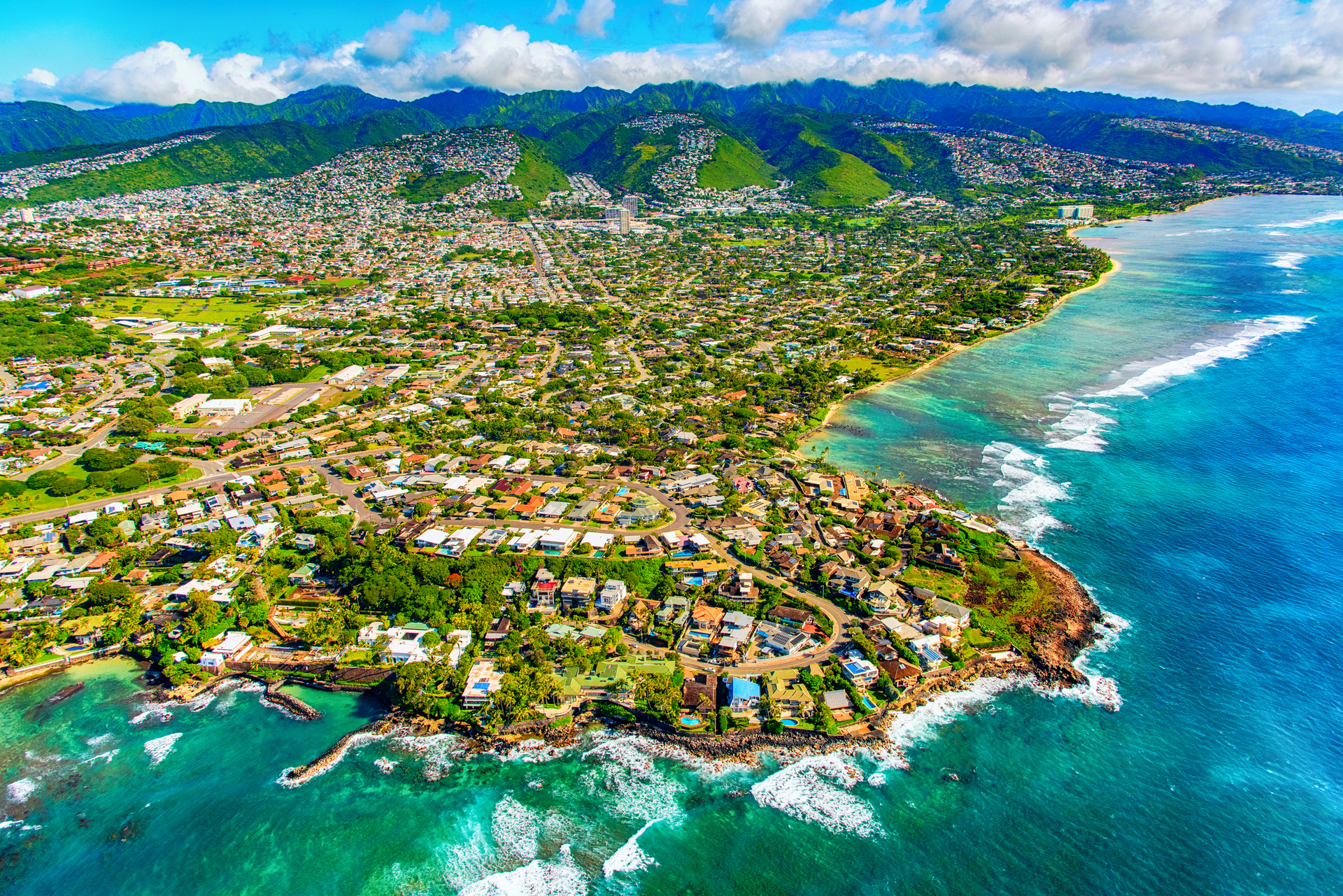
In a city defined by dramatic natural beauty, Black Point stands apart. Tucked between Diamond Head and the Kahala Gold Coast, this small gated enclave of roughly 75 homes is Honolulu's most exclusive, most storied, and most quietly sought-after address.
The neighborhood sits on a hardened lava promontory, known in ancient Hawaii as Kupikipikio, meaning turbulent water, a vivid name for the stretch of jagged black volcanic rock where the Pacific crashes in from the south. Today, the cliffs and tidal pools that gave the area its English name are the backdrop to one of the world's most extraordinary residential landscapes.
No resort towers. No manufactured charm. What you will find are gated streets, a private saltwater community pool replenished by ocean waves, architecture that spans nearly a century of Hawaii's design history, and the kind of privacy that money struggles to buy anywhere else on the island.
2026 Market Forecast
Single-Family Housing, Black Point, Honolulu
Black Point operates by a different set of rules than virtually anywhere else in Hawaii. With only approximately 75 homes in the entire neighborhood, inventory is chronically constrained. That scarcity, combined with relentless demand from high-net-worth buyers both locally and globally, creates a self-reinforcing cycle of appreciation that has held firm for decades.
Recent sale prices have ranged from approximately $2 million on the lower end, typically a smaller historic cottage, to well over $16 million for premier oceanfront estates. Some trophy properties have traded as high as $23 million. The neighborhood's recorded high reached $16.5 million for a four-bedroom oceanfront home on a 38,284-square-foot parcel. As of early 2026, listing activity remains thin, and properties that do reach the market attract well-qualified buyers quickly.
Persistent Inventory Shortage
In a neighborhood of 75 homes, even two or three listings represent a significant portion of total inventory. This structural scarcity underpins values even when broader market conditions soften.
Ultra-High-Net-Worth Demand
Remote work flexibility, continued mainland migration, and strong Asia Pacific interest keep demand elevated. Black Point sits squarely in the crosshairs of the global luxury buyer pool.
Adjacent Market Appreciation
As prices in Kahala and Diamond Head continue climbing, Black Point's relative value becomes ever more compelling to buyers who demand unmatched exclusivity without sacrificing proximity to Honolulu.
Historic Architecture Premium
Mid-century and 1930s gems, including homes by celebrated modernist Vladimir Ossipoff, are increasingly recognized for cultural significance, commanding premiums from buyers who value authenticity over square footage.
2026 Price Forecast and Investment Outlook
For 2026, the Black Point single-family market is forecast to see continued moderate appreciation in the three to five percent range, consistent with broader Honolulu luxury trends. Oceanfront and cliffside parcels are expected to outperform the neighborhood average given ongoing scarcity of waterfront inventory across all of Oahu.
"Black Point is not a market you time. It is a market you enter when the right property becomes available, and you hold it."
Why People Love Living Here
The Black Point Lifestyle
Gated, Guarded, Genuinely Private
In a city that draws millions of visitors each year, genuine privacy is among the most prized commodities in Honolulu real estate. Black Point delivers it absolutely. The neighborhood is gated with 24/7 security. An inner gate on Royal Circle restricts access to just eight residences. The result is a tranquility that is profound and rare.
A Private Saltwater Treasure
One of the most beloved amenities in all of Honolulu's residential landscape is Black Point's private community saltwater pool, replenished naturally by ocean waves. Accessible only to residents behind the main gate, it has been a cherished gathering spot for generations of families who have called this neighborhood home.
Ocean Views That Never Grow Old
Homes along the perimeter enjoy panoramic views of the Pacific stretching to the horizon, with Koko Head visible to the east and open water to the south. The sound of waves breaking against ancient lava rock is the neighborhood's constant, irreplaceable backdrop.
Seclusion and City, Both at Once
Situated between Kahala and Diamond Head, residents sit minutes from world-class shopping, dining, and entertainment. Downtown Honolulu is under fifteen minutes by car. Yet within the gates, the city's energy feels entirely absent. This combination is extraordinarily rare in any world-class city.
The Neighborhood Has Always Attracted Exceptional People
Doris Duke built her landmark estate Shangri La on the coastal cliffs in 1937. Jazz legend Martin Denny made Black Point his home for decades. The estate used as the filming location for Magnum P.I. was here, and Tom Selleck, genuinely enamored of Hawaii, lived in the neighborhood during those years. Alongside these names, Black Point has been home to generations of Oahu's most respected kamaaina families, whose roots here stretch back decades.
Attractions, Dining & Amenities
What surrounds this remarkable neighborhood
Shangri La Museum
Doris Duke's legendary 14,000-square-foot estate is now one of Hawaii's most distinctive cultural institutions, home to an extraordinary collection of Islamic art assembled over her lifetime of world travel. Tours depart from the Honolulu Museum of Art and offer one of the most singular cultural experiences on the island. The estate sits directly on the Black Point coastline.
Diamond Head State Monument
One of the most iconic landmarks in the world sits minutes from Black Point's front gate. The Diamond Head volcanic tuff cone offers a moderately challenging hike rewarding visitors with sweeping panoramic views of Waikiki, the Gold Coast, and the South Shore. For residents, the trail is practically a backyard amenity, and many make it a regular part of their fitness routine.
Kapiolani Park
Honolulu's largest and most beloved public green space lies just beyond Diamond Head, offering 300 acres of open lawns, jogging paths, tennis courts, and the Waikiki Shell amphitheater. On weekend mornings it fills with farmers' markets, yoga classes, kite flyers, and local families. Black Point residents enjoy it as their de facto neighborhood park.
Waialae and Kahala Beaches
Just around the corner to the east, Waialae Beach Park and the quieter stretches of Kahala Beach offer some of the most tranquil swimming on Oahu's South Shore. Protected from heavy surf and free of the tourist density that defines Waikiki, these beaches are a calm, local retreat for residents of the corridor.
Black Point Lava Coast
The rugged lava formations along the Black Point coastline create exceptional habitat for Hawaii's marine life. Residents regularly encounter sea turtles, colorful reef fish, and octopus in the tidal pools and near-shore waters. Snorkeling along the point, surrounded by the black lava and deep blue Pacific, is an experience that never grows old.
Dining Near Black Point
From the Neighborhood to Nearby Gems
Hoku's at The Kahala Hotel
Just minutes from Black Point, Hoku's is the quintessential special-occasion restaurant for the neighborhood. With its multi-tiered dining room overlooking the ocean and a menu blending Asian and European culinary traditions, it is the go-to for residents entertaining distinguished guests. The Sunday brunch is considered among the finest on the island.
Merriman's Honolulu at Ward Village
A pioneer of farm-to-table dining in Hawaii, Peter Merriman's Ward Village flagship brings Hawaii Regional Cuisine to a lively, beautifully designed bistro. A Hale Aina Award winner, Merriman's sources from Hawaii's finest farms and fishing operations, producing dishes that celebrate the extraordinary quality of local ingredients.
Bogart's Cafe, Monsarrat Avenue
For a casual start to the morning, residents have long made the short drive to Monsarrat Avenue's charming cafe corridor. Bogart's is a neighborhood institution for breakfast and lunch, with hearty fare in a relaxed, local atmosphere. The Monsarrat strip, set against the backdrop of Diamond Head, feels like the real Honolulu.
Pioneer Saloon, Monsarrat Avenue
A favorite among residents of the Diamond Head and Kahala corridor since 2009, Pioneer Saloon is celebrated for its elevated take on local plate lunch traditions. From Furikake Salmon to Mochiko Chicken to the beloved Hamburger Steak, the menu is a love letter to Hawaii's multi-ethnic culinary heritage, executed with genuine care.
The History of Black Point
From Volcanic Origins to Honolulu's Most Exclusive Address
Ancient Hawaii
Volcanic Origins: Kupikipikio
Like all of Hawaii, Black Point's story begins with fire. The hardened lava flows that define the neighborhood's dramatic coastline are the product of volcanic eruptions roughly contemporaneous with the nearby Diamond Head tuff cone. The ancient Hawaiian name for the area was Kupikipikio, meaning turbulent water, a vivid description of the powerful surf and whitecap swells that crash relentlessly against the volcanic cliffs. The street names preserved today, Royal Circle and Royal Place, echo this land's long history as the domain of Hawaiian ali'i, the noble class of chiefs whose authority shaped the island's social and spiritual life.
Early 1900s
A Military Presence
As the United States extended its strategic presence across the Pacific in the early twentieth century, Black Point's commanding coastal position attracted military attention. The U.S. Army installed an artillery battery on the knoll as a coastal defense installation, guarding against naval invasion. Changes in military strategy rendered it obsolete quickly, and in 1955 the U.S. government formally returned the land to the State of Hawaii, opening the door for the residential development that would follow.
1920s and 1930s
Bohemian Beginnings
The first residential homes at Black Point appeared in the 1920s, and the early character of the neighborhood was decidedly artistic and free-spirited. Small bungalow homes sprang up along the lava coast, attracting a creative, independent-minded set who appreciated the dramatic setting and the distance from Honolulu's more established social hierarchies. Several of these original cottages, with their split-pitch roofs and lava rock construction perfectly suited to the landscape, still stand today. They are now coveted for their historic authenticity and the irreplaceable quality of early Hawaiian residential architecture.
1937
Doris Duke and Shangri La
The pivotal moment in Black Point's emergence as a world-class enclave came in 1937, when tobacco heiress Doris Duke, then one of the wealthiest women in the world, chose the cliffs above the Black Point surf break as the setting for her dream estate. Shangri La, as she named it, was a 14,000-square-foot masterwork of Islamic-influenced architecture and design, built to house the extraordinary collection of Islamic art, tile work, woodwork, and textiles she had assembled during her global travels. The estate signaled to the world that Black Point was a place of exceptional distinction. It is now operated as a museum by the Doris Duke Foundation for Islamic Art and remains one of the most culturally significant private residences in American history.
1950s and 1960s
The Post-War Architectural Boom
The real buildout of Black Point as a cohesive residential community occurred in the late 1950s and early 1960s. This period saw the construction of many of the neighborhood's most architecturally distinguished homes, including several designed by Vladimir Ossipoff, Hawaii's most celebrated mid-century modernist architect. Ossipoff's approach, open plans, deep overhanging eaves, seamless indoor-outdoor integration, and profound sensitivity to the tropical environment, produced homes that remain among the most admired in Hawaiian residential architecture. This era established Black Point's character as a neighborhood of refined, architecturally serious homes within one of the most dramatic natural landscapes on the island.
Today
Black Point in 2026: A Living Legacy
As of 2026, Black Point endures as one of the most exclusively residential neighborhoods in the entire United States, not because of any master plan or deliberate curation, but because of the organic accumulation of remarkable people, extraordinary architecture, and a natural setting so dramatic that it simply does not permit mediocrity. The approximately 75 homes that make up the neighborhood represent a cross-section of Hawaii's residential history spanning nearly a century, from weathered lava-rock bungalows to contemporary glass-and-concrete estates, from historic mid-century modernist masterpieces to new construction aspiring to the highest standards of tropical luxury living.
Black Point is not a market you time. It is a market you enter when the right property becomes available, and then you hold it, and you are grateful every single morning that you did.
Black Point, Honolulu · Diamond Head Coast · 2026
Check out this article next